Sunday, October 23, 2011

Breakdown

Film: A Woman Under the Influence
Format: DVD from Rockford Public Library on kick-ass portable DVD player.

Insanity always makes for good fare in a movie. There’s something inherently lurid about mental illness, even though there shouldn’t be. There is a tremendous stigma attached to mental illness; people don’t like to talk about it and are often embarrassed by it. People aren’t embarrassed about heart disease or a stroke, but a little schizophrenia or schizoid personality disorder, and out come the jokes, the snickering, and the little white lies.

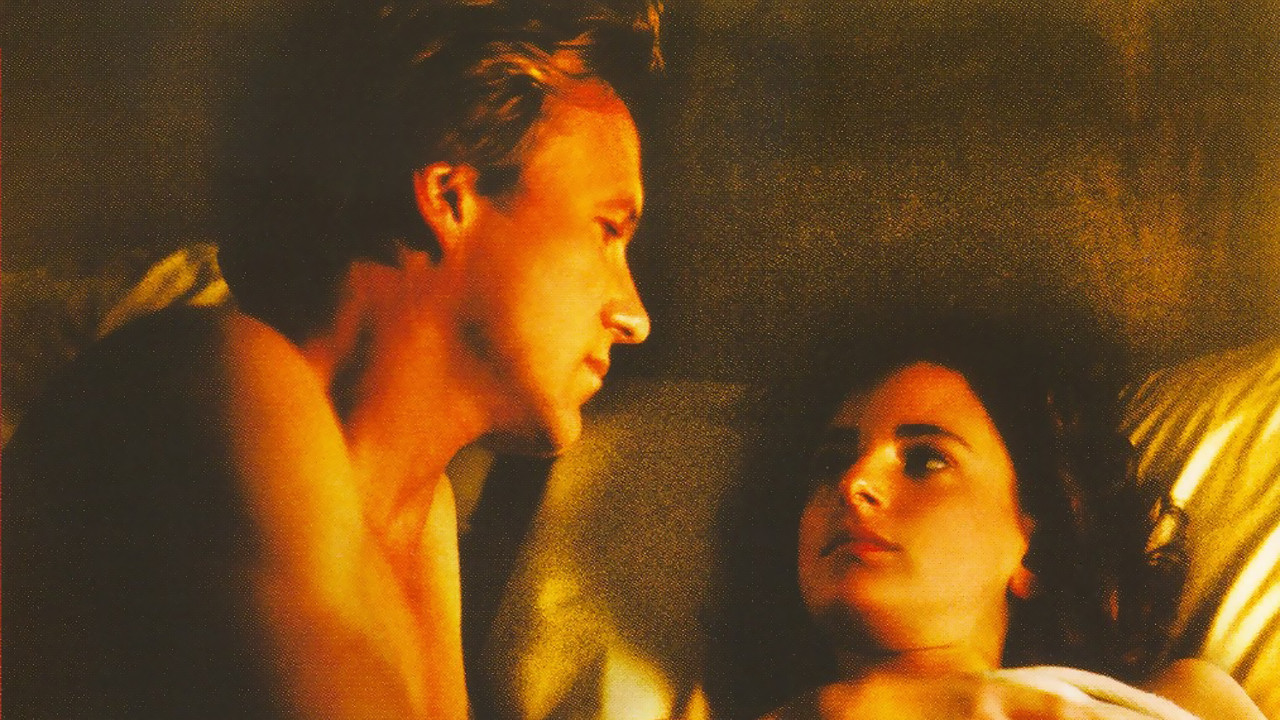
A Woman Under the Influence is John Cassavetes’s take on insanity. And it’s terrifying. In another context, the slide into insanity suffered by Mabel Longhetti (Gena Rowlands) would be comical. She is manic, talks to herself, acts inappropriately, mouths words, and is generally unnerving; in a lot of ways, she acts similarly to David Helfgott in Shine, which I watched just yesterday.

The issue is that her husband, Nick (Peter Falk), has no way to react to her bubbling insanity. He can’t control his own reactions to her and can’t control anything about what she is doing. He does love her, and loves her desperately. He just can’t figure out what he is supposed to be doing, or any way to help her. When she finally breaks down completely he has her institutionalized, and discovers that he also has no real way to relate to his own children without the buffering influence of Mabel.

Eventually, Mabel returns home, and again, no one knows how to react to her, and her return home is just as painful as her departure was. She has no coping mechanism for her world, and no one in her world has a coping mechanism for her. It’s harrowing to watch. Cassavetes does give us an emotional upturn at the end, but the path to get to that upturn is absolutely laden with emotional pain.

While there is a very large cast in this film, the only two that we are really concerned with are Mabel and Nick Longhetti. And these are incredible performances throughout. Falk is as good as he has ever been as a man torn by his deep love for his wife and his complete inability to relate to her on any level. That said, this film belongs entirely to Gena Rowlands. This is the sort of performance that is typically called “career making,” and in this case, that phrase has teeth. She shifts into various stages of mania back and forth naturally and seamlessly. It is one of the greatest film performances I have ever seen.

But, it’s really difficult to watch. It’s not an easy thing to see someone essentially self-destruct on camera, or to see the distress that this causes in everyone around her. This is not a pleasant film to get through, and with a length extending well over two hours, it is not over quickly. This is not simply in Gena Rowlands’s scenes. After she is committed to an asylum, Nick takes the kids out of school for the day and takes them to the beach. On the way home, he rides in the back of a friend’s pickup truck and feeds the kids (who are ranging in age from probably 5 to 8) a steady diet of beer to essentially knock them out and get them to sleep once they get home. It’s tragi-comic. He literally has no other way to deal with his kids because he’s never had to before.

I’m glad I watched this film, but this is another in the list that I don’t want to see again. It’s absolutely worth watching for the two performances—I could argue in fact that it should almost be considered required viewing for this reason. But it is a harrowing ride and painful to get through. Watch it once, and you’ll remember it for the rest of your life.

Why to watch A Woman Under the Influence: How many people live like this? How many would admit to it? I’m guessing the first number is high and the second is low.
Why not to watch: It is monumentally painful.

Saturday, October 22, 2011

Rach 3

Film: Shine
Format: DVD from DeKalb Public Library on kick-ass portable DVD player.

David Helfgott had talent. At a young age, he was a musical prodigy taught by his father. But, according to most accounts, his father was tyrannical, allowing for no deviation from a set path and no ability to walk away from his own particular view of the world. David Helfgott rebelled from his father, pursued his own genius, and was crushed by it, becoming a broken shell of a man lost in his own world until others rediscovered his genius and worked to bring him back. Or, at least that’s the story that we see in Shine.

And that’s really the story. There isn’t a massive amount of plot here—talented young man is broken and the shattered pieces are slowly formed back together into broken man who finds a way to continue forward. Instead, this is a character study of Helfgott and his life, and in the adult years, his mania and his manic personality. The real man has been diagnosed with schizoaffective disorder, sort of like bipolar with breaks from reality.

Helfgott (Geoffrey Rush, in his first major film performance), according to the film (and presumably in life), cannot help but speak nearly constantly, rambling on with word associations leading down winding paths. He is, perhaps, his own unique position on the autism spectrum, his mind and mouth going a mile a minute.

We get the full story, starting in Australia, seeing young David (played initially as a child by Alex Rafalowicz) losing a music competition, but being discovered by a local piano teacher named Rosen (Nicholas Bell). As he continues to play and improve, David is offered the chance to attend school in the U.S., but this is stopped by his father (Armin Mueller-Stahl), but rescued emotionally by co-founder of the Australian Communist Party, Katharine Susannah Prichard (Googie Withers). When David is invited to study at the Royal College of Music in London, he goes against his father’s wishes, and his father disowns him.

Once there, David (played as an adolescent by Noah Taylor) competes with Rachmaninoff’s 3rd Piano Concerto, a piece known for its brutal difficulty. He owns the piece, lives it, but the performance breaks him completely, sending him to a mental institution and shock therapy. Eventually back in Australia, he is institutionalized again in part because he has nowhere to go—his family essentially doesn’t recognize him due to pressure from his father. He is rediscovered by a worker at the institution, and slowly comes back to playing, eventually marrying an astrologer named Gillian (Lynn Redgrave) and performing in concert again. Yeah, that’s a spoiler, but it’s not much of one.

What’s fascinating here is that the real story is actually more unbelievable than the film—he was actually rediscovered in a bar by his own brother. But no matter.

There are a couple of important points that need to be made here. First is that the real reason to see this film is not for the story, but for the performances. They are truly astounding. Geoffrey Rush speaks a mile a minute through the film, constantly mumbling and muttering, off in his own world and his own place. It’s a great performance, and one that won Rush a number of awards including an Oscar and a Golden Globe. It seems, though, that the performance of Noah Taylor got lost in the shuffle here. Rush is asked to portray the broken man on his journey back, which is admittedly impressive. Taylor, though had the unenviable task of portraying the man as he breaks, which I think is much more difficult. Taylor seems forgotten here, which is a damn shame, because what he brings to the film is easily as much as what Rush brings.

The other thing is this--Shine is a film that seems naturally made to win awards. It’s the same sort of film as A Beautiful Mind and a couple hundred others about individuals broken by life and talent and madness who find a way back to something by the end of the film. I can’t say that it’s boring, but I can say that it wasn’t too long into the film that I was pretty sure where we were headed.

Is it good? It is, but it’s good strictly because of the performances here. While the story is interesting, it’s a story you’ve almost certainly seen before with a different cast of players and a slightly different mental defect. Other than that, this film, while not forgettable, doesn’t specifically distinguish itself from other films that tread essentially the same ground.

Why to watch Shine: The music, the performances, and the musical performances.
Why not to watch: How many movies about broken geniuses do you need to see?

Thursday, October 20, 2011

She Done Us All Wrong

Film: She Done Him Wrong
Format: Streaming video from NetFlix on laptop.

Mae West was a Hollywood icon in the early days of talking pictures. Despite the fact that I haven’t seen a lot (or any) of West’s films before today, but even I knew what the stereotypical Mae West performance looked like, and most especially sounded like. What’s fascinating here is that West didn’t have a huge career in the films. She acted in only 13 films, and only 11 during those golden early years.

She Done Him Wrong was her second film, and her first major film. It was also the first major break for Cary Grant, which makes it pretty interesting. However, the most interesting thing about the film is that it’s one of the last films to appear before the Hays Code, and was one of the movies that proved to be instrumental in the creation of the Code. In many ways, the Hays Code and the years of censorship happened as a reaction to this film and similar ones. Oh, there were others, of course, but the far more open sexuality of this film certainly raised a lot of eyebrows.

In She Done Him Wrong, West plays Diamond Lou, or perhaps Lady Lou, who is the epitome of the character that she was known for. Lou is called “Diamond Lou” because she more or less collects diamonds, and more importantly collects the men that come with them. When the film comes, Lou has a metric ton of diamonds, and a metric ton of men she’s keeping on the string, but true to form, she doesn’t feel like she’s got enough of either of them.

There are plenty of guys to talk about here. Captain Cummings (Cary Grant) runs the mission next door to the bar where Lou sings, and he’s persona non grata at the bar for everyone but Lou. Also in the running is Chick Clark (Owen Moore), who starts the film in prison for stealing diamonds to give to Lou. He’s the jealous type, and threatens Lou with danger should she run around with other men, which she does, and which is why he breaks out of prison in the middle of the film. We’ve also got Serge Stanieff (Gilbert Roland), who is a criminal in the employ of Lou’s current flame Gus (Noah Beery), who runs her club as well as thievery, counterfeiting, and prostitution rings. And if that weren’t enough, there’s also Lou’s bodyguard Spider (Dewey Robinson), who says more than once that he’ll do anything for Lou. There’s at least one more, but I can’t be arsed to care at this point.

If we want to peg the title here, the man she (Lou) is doing wrong is Chick, but since he’s a wild-eyed criminal, it’s hard to care.

So let’s talk about the real point of this movie. The entire point is to put Mae West and as much sex as possible on the screen. West wears a series of form-fitting dresses that emphasize her figure, her cleavage, and do as much as possible to force her to walk with itty bitty steps and swing her generous hips back and forth. The problem is that, really, she’s not very appealing. Every guy in the film is wild about her, but I spent the bulk of the film with a sort of confused expression on my face, wondering where the sex appeal was supposed to come from.

More importantly, the entire film is a loosely connected series of vague plot points that are supposed to add up to a whole, and don’t. Nothing in the film ties together well, and a big part of this more than likely comes from the extremely short running time of just over an hour. While I’m not trying to add to my own pain here, this is a story that could use either about half the number of characters or another 50% in the running time. There’s too much to try to fit into this small package, and the conclusion feels rushed and unsatisfying because of it. Lou literally gets away with murder and no one really cares too much about it—another no-no after the Hays Code showed up.

In many ways, this film is a tremendous disappointment. West belts out a couple of songs, and she does this unsatisfyingly each time. The exaggerated walk looks less sexy and more like parody the more she does it. Even Grant’s unique speaking style comes off less like his trademark accent and more like affectation. Seriously, for a film that caused the Hays Code to be enacted, or at least was a significant part of it, I expected a hell of a lot more than this mildly saucy film and a couple of tight dresses.

In short, this is a big “so what.” It’s shocking to me that evidently this was such a thin year for films that this thing was nominated for Best Picture. I never thought I’d be bored by Cary Grant, but this film has proven me wrong. In a short list of things done right in this, the ultra-short running time is, ultimately, the best simply because it reduces the amount of suffering.

Why to watch She Done Him Wrong: Everyone should be at least a little familiar with the Mae West stereotype.
Why not to watch: It’s shocking that this is the best of Mae West’s career.

Wednesday, October 19, 2011

Expressionism's Greatest Expression

Film: Metropolis
Format: Streaming video from NetFlix on laptop.

Metropolis is, like Nosferatu and some Chaplin films, the silent film that non-silent fans may have actually seen. While not the first science fiction film, it is perhaps the first great one, and one of the first (if not the first) to have a fully-fleshed plot and characters that are more than cardboard cutouts. Metropolis, despite its age, still has the ability to wow an audience with the size and scope of the sets if for no other reason.

It is, however, right in the heart of the German Expressionist movement, which means that you can expect that very little of this story will be specifically dropped into your lap for the understanding. No, it’s all going to be veiled by bizarre sets, heavy symbolism, unusual lighting, and all other sorts of weirdness. Much of what happens here will be melodramatic in the extreme, not the least of which are the facial expressions and movements of the actors. What you may not expect is how interestingly this film resonates with the current day.

In the city of Metropolis, the vast majority of people are workers, and they work far below the ground tending machines, keeping a brutal, inhuman pace to maintain the running of the mechanical works that keep the city going. Most of this is done for the benefit of the managers, especially Joh Fredersen (Alfred Abel), the original architect of the city. The children of the managers enjoy a life of pastoral bliss, sport, and intellectual pleasures far above the madding crowd. Of these, our interest will be the most taken with Fredersen’s son, the unimaginatively named Freder Fredersen (Gustav Frohlich).

Early in the film, Freder meets Maria (Brigitte Helm), who lives in the Worker’s City and has brought a small group of children up to see the top levels. Freder is immediately captivated by the girl’s beauty and wishes to follow her. He does, and discovers the hell that the workers below the city live in. He witnesses the explosion of a giant machine that causes the deaths of a number of workers, but finds that his pleas to his father for better treatment for the workers go unheeded. Around this time, we also discover that Freder’s mother died in childbirth, and that she was loved not only by his father, but by the mysterious inventor, Rotwang (Rudolf Klein-Rogge). Rotwang is a mad genius, and has created a mechanical man (also played by Brigitte Helm) that he wishes to use to recreate his lost love. But Fredersen convinces him to give the machine Maria’s face, since she is a leader of the workers. In this way, they will sow dissention among the workers and maintain their hold over the populace and their own comfortable lifestyle.

Of course, it’s all quite a bit more complicated than this, because this covers about the first half of the film. It also doesn’t cover Josaphat (Theodor Loos), fired by Fredersen and immediately rehired by Freder. It neglects The Thin Man (Fritz Rasp), sent to spy on Freder. The Thin Man is actually a pretty terrifying screen creation. He looks tailor-made for German Expressionism, because his head is made up of a number of strange angles.

Metropolis is most noteworthy not for the story it tells, but the style with which it tells the story. While not a case of style over substance (since there’s plenty of substance here), it’s the style that is in many ways the most interesting. The story itself is hardly anything new—privileged youth becomes enamored of poor girl and seeks to right social wrongs to win her love. But the strange look of the backgrounds, the huge and impressive sets, and the strange technologies that run through the film are what make it something fascinating to see on the screen. In today’s world, Metropolis lives and dies by its appearance, and if the message gets through, so much the better. Beyond the Machine Man, there are plenty of fascinating set pieces. The explosion of the giant machine, for instance, looks to Freder like people being marched endlessly into the mouth of Moloch. Later, when Freder takes a turn at a machine, he hallucinates himself strapped (almost crucified) on a relentlessly whirring clock.

Of course, the message is no secret here. We’re shown it in the first few moments of the film when a title card saying that between the hands and the brain, the heart must be the mediator appears. This is reinforced around the middle of the film when Maria tells the story of the Tower of Babel to the workers, claiming that while thousands worked on it, the work went awry because only the planners knew the ultimate purpose of the structure. The parallel here, of course, is to the workers and the managers. The managers neither know nor care about the difficult, painful lives of the workers, and the workers have no idea of the ultimate purpose of what they do.

Are there parallels to today? Of course there are. This will undoubtedly date this review in future months, but it’s impossible to watch this film today and not see a cognate in the recent Occupy Wall Street movement. So much goes to so few, and the hands no longer know the reason for their labors.

But is it good? Yes, it is. I watched the restored version, which adds a good half hour to the original film. It’s quickly evident where footage was added in, because this footage is of relatively poor quality, but it’s nice to see the film in a more complete state, regardless of how that footage looks. Metropolis may have lost most of its power to cause awe and shock, but it still works, the effects are still good, and the Machine Man is still impressive as a piece of costuming. Additionally, the first time it moves is one of the most iconic moments in film history, akin to Al Jolson singing.

Why to watch Metropolis: A formative film both for science fiction as a genre and film as a medium.
Why not to watch: It’s pretty weird, even for science fiction.

Tuesday, October 18, 2011

A Painting Worth 1,000 Sighs

Film: Laura
Format: DVD from Rockford Public Library on kick-ass portable DVD player.

While anyone who knows anything about film noir will tell you that it’s not really a genre and more of a style, it is a handy way to classify films. For me, it’s a good way to tell if I’m going to like something, since I have a tendency to really enjoy film noir. Laura is an unusual film, and an unusual film noir. It doesn’t have the lurid title or anything on the surface that would seem to indicate noir goodness, but there’s a lot going on in its relatively short running time.

We start with the murder of Laura Hunt (Gene Tierney), who went out violently—a face full of buckshot. Detective Lieutenant Mark McPherson (Dana Andrews) is set to investigate the murder, and he’s got a few prime suspects lined up. First is Waldo Lydecker (Clifton Webb), a vain, pompous, and mildly effeminate newspaper columnist who met Laura years before. He helped her get her start in the advertising business and was instrumental in her early success. Also on the chopping block is Shelby Carpenter (Vincent Price), Laura’s somewhat estranged fiancé. While engaged to Laura, Shelby has a reputation for carrying on with other women, including Laura’s aunt, Ann Treadwell (Judith Anderson).

As McPherson digs deeper into the case, we learn some other interesting tidbits. It’s evident right away, for instance, that Lydecker is enamored of Laura and jealous of Shelby Carpenter. He indicates that he’s used his influence in the past to push suitors away from Laura since those suitors weren’t good enough for her. He dislikes Carpenter to a nearly insane degree, and would love nothing more than to hand him over to McPherson, indicating that the man has a sketchy past, and was seen stepping out with one of the models from the advertising agency where he works with Laura.

What also becomes clear is that McPherson is rapidly becoming obsessed with the dead woman, offering to buy the portrait of her, and sleeping in her apartment. Imagine his shock, and the shock of the audience, when mid-way through the film, Laura Hunt turns up alive. This means naturally that the body with the head full of buckshot was somebody else, and now there’s more than enough motive to go around for the dead woman caught wearing Laura’s nightgown.

This is a clever film all the way through. While it lacks a true femme fatale in Laura Hunt, it has all of the other aspects of a film noir, including shady characters hiding the truth, and a plot that takes a number of intricate twists and turns until it reaches its inevitable conclusion with the true murderer (who I won’t reveal here) getting caught in the end. What’s more impressive is that the various twists and turns all make perfect sense. There isn’t a one that feels forced or inappropriate to the story. Each time we learn something new along with McPherson, the result is a new direction for the story, but one that follows naturally with the story as presented to this point.

If the film is a disappointment anywhere, it’s in the two leads. Gene Tierney is a fine leading lady, but sort of bland here. She’s beautiful enough to make at least three men fall in love with here, but not specifically interesting enough as presented here to make them stay that way, at least in my opinion. As for Dana Andrews, his McPherson is a tough cop gone inexplicably mushy over the painting of a good looking woman. Really, while we don't get a lot of his character, it seems out of place. This guy feels like he should be more hard-boiled than getting wobble-kneed over a painting, especially when the body has been pretty much left sans face.

Fortunately, we are blessed with the presences of both Vincent Price and Clifton Webb. Webb’s Lydecker is a weasel, a preening little peacock who is convinced of nothing so much as his own greatness and importance. He’s instantly dislikable, and he’s intended to be so. As for Price, this role comes before his move into the more horrific side of the film spectrum, but there’s still a touch of the creepy about him here. He’s an interesting choice for a pseudo leading man, but that may simply be my knowledge of his later roles creeping back in.

This is something of an oddball film, but an entertaining one. The ending is tense, and it’s not until the last few minutes that the actual criminal becomes evident. The fact that there are multiple possibilities up to that point indicates good screenwriting. I just wish I liked the characters more.

Why to watch Laura: Vincent Price before he went full-on creepy and a shocking plot packed into less than 90 minutes.
Why not to watch: Remembering that Gene is a woman and Dana is a man.

Monday, October 17, 2011

Kick 'Em When They're Down

Film: The Big Carnival (Ace in the Hole)
Format: DVD from NetFlix on big ol’ television.

Unless you stick to one or two genres of film, after awhile, you see a little bit of everything. Over the last 22 months, I’ve reviewed more than 500 films for this site, watched more, and have 40+ years of previous movie watching experience. I’ve seen a hell of a lot of movies in my lifetime. I’ve seen good, I’ve seen bad, and I’ve seen films that make me despair for the human condition. But in all of that time, I’ve never seen a film as cynical as The Big Carnival (frequently billed as Ace in the Hole).

A lot of Billy Wilder’s films have a deep cynical streak. The Apartment, Stalag 17, Double Indemnity, and Sunset Blvd. all run cynical as well, and until the uplift at the end of The Lost Weekend, that film is as brutal to human nature as any film that came before it. But The Big Carnival tops them all for pure spite, evil, and the brutality of man against his fellow man.

Chuck Tatum (a manly guy with a manly name played by Kirk Douglas) is the greatest newspaper man in the country, at least in his own mind. But he’s offering the owner and publisher of an Albuquerque newspaper a huge discount on his services, because he’s also been fired from 11 straight newspapers for a variety of reasons including drinking, an affair with the editor’s wife, and a libel suit. The publisher, Jacob Boot (Porter Hall) hires Chuck on regardless of his reputation. Chuck is hoping for a big story, a big break, and a big ticket out of Podunk, New Mexico.

The story takes a year to show up. Out on assignment to cover a rattlesnake hunt with cub reporter/photographer Herbie Cook (Robert Arthur), Chuck stumbles onto the biggest human interest story of the year. Leo Minosa (Richard Benedict) has become trapped inside an ancient cliff dwelling, looking for native artifacts to sell at his roadside stand. Tatum crawls in to check on him, and finds the man pinned under a rockfall. Finally, the story he’s been looking for.

What happens next is the cynicism of Wilder’s script. Tatum realizes that a quick rescue will do nothing for him—the only way to get himself out of Albuquerque and back to the big time is to turn this event into a huge, nationwide story. The only way to do that is to create a media circus around the event, and that means that Minosa will have to stay trapped longer than the day or so that the contractor (Frank Jaquet) tells him shoring up the cave and digging the man out will take.

To do all this, Chuck starts enlisting support for his plan. He convinces the local sheriff (Ray Teal) to pressure the contractor to go through the top of the mountain, a process that will take a week to reach the trapped Leo. This, Tatum assures the sheriff, will virtually guarantee his constant re-election for the near future, and will make the contractor the biggest name in the state. He also convinces Leo’s wife Lorraine (Jan Sterling) to stay for the duration despite the fact that she wants nothing more than to leave Leo behind. Why stay? Because as it turns out, the sudden publicity has made her roadside restaurant/store a big hit, and she’s raking in cash hand over fist. Even the idealistic Herbie turns cynical, thinking about turning his photography into a spread for Look or Life magazine.

And so it goes. Tatum does everything he can to be the only source of information on Leo Minosa, trying to leverage the greatest human interest story in the country as a way to get out of the dead end he is in. The suffering of Leo doesn’t matter. Neither does the fact that Lorraine Minosa is a classic femme fatale, looking out only for herself, even to the point of making a play for Tatum’s affections if it will get her to New York and out of her roadside stand. Only Leo and his parents are anything like sympathetic characters here, with the possibly inclusion of Jacob Boot, who wants nothing more than to run an honest newspaper.

The ending is pure film noir, and it really is the only ending that would satisfy this story. Anything less, anything milder, anything easier on the character of Tatum as arch-cynic would shortchange everything that Wilder established through the first two acts of the film.

Is this Wilder’s best movie as well as his most cynical? Probably not. It would be difficult to say the least to surpass Double Indemnity. But make no mistake--The Big Carnival is every bit as brutal and unflinching it exposing the dark heart of many a human animal and every bit as smirkingly sardonic as any film ever made. Wilder was a master of converting any genre he got hold of into something that reflected his world view of romanticism turned cheap and vulgar. Wilder was in many ways the dark mirror reflection of Frank Capra, and this film is the ugliness hiding inside everyone.

What’s truly noteworthy is that like many films that try to peel back the surface layer and show the corruption and evil beneath, this indictment of journalism and sensationalism has only grown more relevant, save that a modern story would keep Chuck Tatum cynical through to the very last frame instead of attempting to redeem him.

Why to watch The Big Carnival: Wilder at his most cynical, Kirk Douglas at his most ruthless.
Why not to watch: It’s tame compared with modern media.

Sunday, October 16, 2011

Sarah, Can You Hear Me?

Film: Children of a Lesser God
Format: Streaming video from NetFlix on laptop and rockin’ flatscreen.

What’s up with all the romance lately? Honestly, I don’t know. I choose movies based on a variety of things—availability, mood, time, phase of the moon perhaps, and possibly bio-rhythms. Regardless, I have evidently been on a bit of a romance kick lately. Children of a Lesser God is a film I’ve almost started a couple of times and just haven’t, so it was time to finally sit down and watch it.

The story is pretty simple. James Leeds (William Hurt) is a speech teacher specializing in training deaf students to speak. He begins at a new school and initially has some success with the students, but for him, the challenge isn’t the kids, but the janitor, Sarah Norman (Marlee Matlin). A former student at the school, Sarah refuses to lip read and refuses to talk. But James wants to help her. More on this in a bit. Sarah is what can only be described as aggressively deaf.

But really, that’s the whole story. Their relationship starts rocky and stays rocky, even when she moves in with him. He would like her to talk. She doesn’t want to talk. They fight a lot, and there is a great deal of angry sign language.

Honestly, that’s the whole movie. It’s a pretty standard romance with the difference being that the woman is deaf and that the man is a teacher of deaf students. Remove that particular angle, and this is little more than a standard romance between two people who fall in love with each other but have some differences that they need to resolve. The main difference here is her identity has a deaf person. She wants him to accept her for who and what she is, but it’s pretty evident through the bulk of the film that she has no idea what she wants. She wants him to come into her world, but she won’t enter his—won’t even budge.

Matlin won an Oscar for this role, which was her first role of any kind in a film. I can’t say she didn’t deserve it, but a part of me wonders. Considering that she beat out Sigourney Weaver in Aliens, which has become an iconic role for women, one has to wonder if the award went to Matlin for that old Oscar thing of playing someone with a disability. The fact that Matlin didn’t have to act that part of the role doesn’t matter. Physical handicaps win awards in Hollywood.

So let’s get back to this idea of the caring James wanting to help the aggressive and angry Sarah. James, naturally, is portrayed as a wonderful teacher, the kind of teacher that seems to exist only in movies and is there mainly to inspire his students to become something greater than they are. If you’ve ever seen a movie that involves a teacher, you know the kind I’m talking about. And as a member of the audience here, I have no reason to disbelieve either the quality of his teaching or his desire to truly help Sarah communicate with the outside world. But, let’s be honest about this for a moment. A big part of the reason that James wants to help Sarah is that Sarah looks like Marlee Matlin. If she looked like Bella Abzug, we’d have a different movie on our hands.

I’m not sure if the deaf angle is actually that important here, which is a very smart move. In essence, deafness is simply what they fight about. It’s no different from anything else that couples fight about. What I mean is that couples fight, and this couple simply fights about her deafness. It could just as easily be his career or anything else. Sarah’s deafness is not so much a plot point as just a part of her character, and this is a smart decision.

Regardless of this, there’s not enough here to really get me excited about this film. It plays like a big budget After School Special in a lot of respects. Everyone should be able to be the person they want to be and each of us is special in our own way. I’m not sure I needed Marlee Matlin and William Hurt to tell me this.

Why to watch Children of a Lesser God: It’s interesting to see deafness brought to the big screen.
Why not to watch: You learned the moral of this story in first grade.